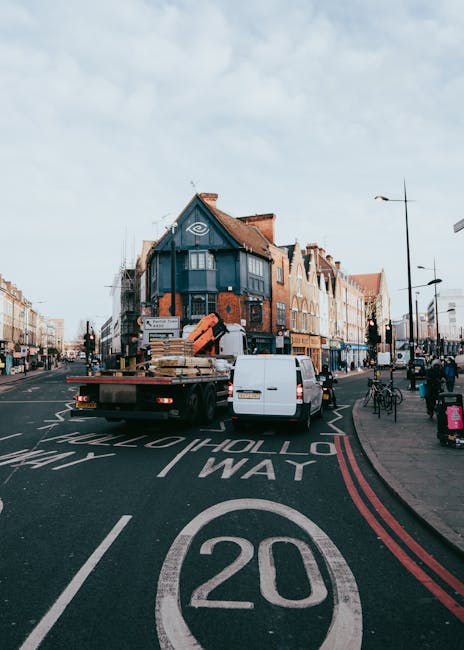
Man with van West Hampstead Mill Lane guide for small moves
If you are planning a move around West Hampstead, especially near Mill Lane, the chances are you do not need a huge removals operation. You need something practical, flexible, and quick to turn up, load, and get on with the job. That is exactly where a man with van service tends to make sense for small moves. This Man with van West Hampstead Mill Lane guide for small moves walks you through how the service works, when it is the right fit, what to watch out for, and how to keep the whole thing calm rather than chaotic. Truth be told, small moves can still feel surprisingly full-on if the timing, access, or packing is off.
In the next few minutes, you will get a clear picture of how to plan a local move with less stress, what good service looks like, and which small decisions make the biggest difference on the day. A little preparation goes a long way. A very long way, actually.
Table of Contents
- Why this guide matters for small moves
- How a man with van move usually works
- Key benefits and practical advantages
- Who this is for and when it makes sense
- Step-by-step guidance
- Expert tips for better results
- Common mistakes to avoid
- Tools, resources and recommendations
- Law, compliance, standards and best practice
- Options, methods and comparison table
- Case study or real-world example
- Practical checklist
- Conclusion
- Frequently asked questions
Why Man with van West Hampstead Mill Lane guide for small moves Matters
Small moves are easy to underestimate. One sofa, a few boxes, a mattress, a desk, and a lamp can sound simple until you start carrying them down narrow stairs, trying to park near a busy road, or realising the lift is not working. West Hampstead has plenty of homes, flats, and shared properties where access can be tight, parking can be awkward, and every extra trip eats into your day.
That is why a man with van option matters. It is not about "mini move" being less serious. It is about choosing a service that matches the scale of the job. When the move is small, paying for a full-size removals team can be overkill. On the other hand, trying to do everything yourself in one hire van run can become a false economy if you end up making multiple journeys, injuring yourself, or damaging furniture.
For Mill Lane specifically, local timing and access can matter almost as much as the move itself. A short journey can become a long one if you have not thought through loading space, parking, or whether your building allows easy van access. The best planning feels boring on paper and brilliant on the day.
Practical takeaway: for small local moves, success usually comes from matching the vehicle size, arrival time, packing method, and access plan to the reality of your building, not the idea of it.
If you are comparing providers, it also helps to understand the business behind the service. You can read more about the company's background on the About Us page, and if you want to understand how enquiries are handled, the contact page is the natural next step.
How Man with van West Hampstead Mill Lane guide for small moves Works
At a basic level, a man with van service gives you a vehicle, a driver, and often one or more helpers to load, transport, and unload your items. For a small move, that might mean a single room, a studio flat, student items, furniture bought second-hand, or a handful of boxes going into storage. Sometimes the job is a quick one-way move across town. Sometimes it is a couple of stops: home to storage, or storage to a new flat.
The process usually follows a simple rhythm:
- Initial enquiry: you explain what you need moved, where from, where to, and roughly how much there is.
- Quote and timing: the provider estimates the vehicle size, labour, and likely time needed.
- Preparation: you pack, dismantle where needed, and clear access routes.
- Collection: the van arrives, items are loaded carefully, and the team checks fragile pieces.
- Transport: the move happens locally, often with route planning to avoid unnecessary delays.
- Unload and placement: items are taken to the correct room or storage space.
The best runs feel organised rather than rushed. You should know who is arriving, what is being moved, and how long the job is likely to take. If you are storing items as part of the move, it is sensible to review pricing and quotes early so you can see how your overall moving cost shapes up.
One thing that often surprises people: the biggest time drain is not transport. It is access. Narrow staircases, hallway turns, parking distance, and awkward furniture all add time. A good mover will factor this in, but you can help by being honest upfront. A sofa bed that is "kind of awkward" is often more awkward than expected. Happens all the time.
Key Benefits and Practical Advantages
For small moves, the benefits of a man with van service are usually very practical. You are buying convenience, local know-how, and enough muscle to avoid doing the heavy lifting alone. That combination is often exactly what people need.
- Better fit for small volumes: ideal when you do not need a full removals truck.
- Flexible scheduling: useful for same-day, short-notice, or off-peak moving windows.
- Local route awareness: helpful in areas where parking, traffic, and access can be fiddly.
- Less physical strain: reduces the risk of lifting injuries and damaged belongings.
- Potentially faster overall: one organised trip can beat several do-it-yourself van runs.
- Useful for mixed jobs: moving, collecting, delivering, or taking items to storage.
There is also a psychological benefit, which people sometimes forget. A move feels lighter when someone else is handling the awkward logistics. You can focus on keys, paperwork, cleaning, and making sure the old place is left in decent shape, rather than trying to reverse a borrowed van into a space that looks too small by about a foot. Not fun.
If sustainability matters to you, it is worth checking how waste, packaging, and unwanted items are handled. The company's recycling and sustainability information can help you plan a more responsible move.
Who This Is For and When It Makes Sense
This type of service is a strong match for people with smaller, more manageable move sizes. Think students, first-time renters, couples moving one room at a time, landlords shifting furniture between properties, and anyone relocating a few bulky items without needing a full removal crew.
It also makes sense in situations like these:
- You are moving from a studio or one-bedroom flat.
- You only have furniture plus boxes, not a whole house's worth of contents.
- You need help carrying items up or down stairs.
- You are moving items between a home and a self-storage unit.
- You bought something large online or second-hand and cannot move it yourself.
- You want someone who knows the local area and can keep the job simple.
It may be less suitable if you are moving an entire family home, a large number of fragile antiques, or a very long-distance load with multiple complicated stops. In those cases, a larger removals solution may be better value. The honest answer is: use the right tool for the job, not the fanciest one.
A small move is also a good moment to review your paperwork and terms, especially if you are storing items or booking a service at short notice. The terms and conditions page can help you understand the basics before you commit.
Step-by-Step Guidance
If you want the move to feel smooth on the day, start early enough to make the boring parts painless. Here is a simple approach that works well for most small moves in and around West Hampstead Mill Lane.
1. Make a clear inventory
Write down everything that needs moving. Include furniture, boxes, hanging clothes, mirrors, lamps, and awkward bits like bicycles or under-bed storage. This is where people get caught out, because "just a few things" can turn into fifteen items before breakfast.
2. Measure the awkward pieces
Measure wide furniture, tall headboards, and anything that might need disassembly. Also measure stairwells, lifts, and door frames if access is tight. A quick tape-measure check can save a lot of friction later.
3. Decide what should travel by van
Not everything needs to go on the same trip. Some people prefer to take small personal items themselves and leave the bulky or heavy pieces to the van. That can make the move quicker and reduce clutter in the vehicle.
4. Pack with loading order in mind
Put sturdy, heavy boxes at the bottom and lighter, fragile items on top. Mark boxes clearly so you know where they belong at the other end. You do not want kitchen plates buried under winter jumpers. It happens.
5. Check access and parking
Confirm where the van can stop, whether there are restrictions, and how far the team will need to carry items. In local streets, a few extra metres can matter more than people expect. If there is a loading bay or a timed parking window, tell the mover in advance.
6. Protect the fragile stuff
Wrap mirrors, screens, and framed items carefully. Use blankets, bubble wrap, or padding where needed. Even a short journey can jolt delicate items if they are not secured properly.
7. Keep essentials with you
Have your keys, documents, chargers, medication, and a change of clothes with you rather than buried in a box. You will thank yourself later when the kettle is still missing at 8 p.m. and you need a charger immediately.
8. Do a final sweep
Before the van leaves, check cupboards, utility areas, windowsills, and behind doors. Small items have a talent for hiding in plain sight. Then breathe. That final look around always feels a bit emotional, even for a tiny move.
Expert Tips for Better Results
In our experience, the difference between a decent move and a very good one often comes down to small habits. Nothing dramatic. Just sensible choices made early.
- Be accurate with volume: underestimating what needs moving usually leads to extra time or a second trip.
- Prioritise access details: stairs, lifts, parking, permits, and entry codes matter more than people think.
- Use proper boxes: mismatched supermarket boxes can collapse at the worst moment.
- Label by room: it speeds up unloading and reduces confusion.
- Keep heavy items manageable: a box should be heavy enough to hold shape, not so heavy it becomes a hazard.
- Book a sensible time window: early starts often work well in busy local areas because the streets are calmer.
One simple but useful tip: keep one box or bag for immediate-use items. Toiletries, kettle bits, a towel, phone charger, snacks, and basic cleaning supplies all belong there. You will not regret it.
If you are comparing service quality, safety practices matter too. The company's health and safety policy and insurance and safety information are both worth reading if you want a clearer sense of how responsibilities are handled.
Common Mistakes to Avoid
Small moves go wrong in predictable ways. The good news is that most of them are avoidable with a bit of planning.
- Leaving packing too late: the night before a move is rarely the time to start sorting cupboards.
- Not checking access: if the van cannot stop close enough, the job becomes slower and harder.
- Forgetting disassembly tools: beds, tables, and wardrobes often need basic tools to come apart safely.
- Assuming every item fits in one load: some things are bulkier than they look.
- Poor labelling: without room labels, the unload becomes messy very quickly.
- Ignoring insurance or liability details: know what is covered and what is not.
Another subtle mistake is trying to be too vague with the quote request. "A few boxes and some furniture" is not enough when there is a sofa, a desk, two bookcases, a mattress, and half a kitchen hidden in the wings. Better to over-explain than under-explain.
If you want to understand how the company handles payment, especially for booked jobs, the payment and security page is a useful reference.
Tools, Resources and Recommendations
You do not need a van full of specialist kit for a small move, but a few simple tools make life much easier. A good mover will usually bring the main moving gear, though it helps when you have your own basics ready too.
| Item | Why it helps | Best use |
|---|---|---|
| Sturdy boxes | Protects contents and stacks neatly | Books, kitchenware, mixed household items |
| Bubble wrap or packing paper | Cushions fragile items | Glass, frames, electronics |
| Straps or ties | Helps secure items in transit | Furniture and tall loads |
| Blankets | Reduces scratches and scuffs | Wooden furniture, appliances |
| Basic tools | Helps dismantle and reassemble | Beds, tables, wardrobes |
| Marker pen and labels | Makes unloading faster | Room-by-room box sorting |
It can also help to keep a simple moving folder or note on your phone with the essentials: collection address, delivery address, access instructions, contact names, and key timings. Old-fashioned? Maybe. Effective? Absolutely.
If your move involves temporary storage, take a moment to look at the company's main site for service information, and check the pricing and quotes page so there are no surprises when you plan the route and the storage duration together.
Law, Compliance, Standards and Best Practice
For a small move, you usually do not need to become an expert in transport law. Still, a few common-sense standards are worth keeping in mind. Reputable operators should work safely, communicate clearly, and respect your property. If they are loading and transporting items professionally, they should also be clear about insurance, damage procedures, and how complaints are handled.
From a customer point of view, the key things to check are simple:
- Whether the mover explains what is covered and what is excluded.
- Whether the booking terms are clear before you commit.
- Whether there is a reasonable process if something goes wrong.
- Whether the team uses safe lifting practices and sensible loading methods.
Those are not fancy requirements. Just basic professionalism, really. If you want to review how the business handles concerns, the complaints procedure is there for clarity. For broader policies and customer information, privacy policy and related site pages can also help you understand how personal details are managed.
It is also sensible to look at accessibility if you or someone helping with the move has mobility needs, because a good moving day is one where everyone can get in and out without hassle. The accessibility statement provides useful reassurance on that front.
Options, Methods, or Comparison Table
If you are not sure whether a man with van service is the best fit, it helps to compare the main moving options side by side. The right choice usually comes down to volume, access, urgency, and how much lifting you want to handle yourself.
| Option | Best for | Strengths | Trade-offs |
|---|---|---|---|
| Man with van | Small to medium local moves | Flexible, practical, cost-conscious | Limited capacity for large household moves |
| Self-drive hire van | Confident drivers with helper(s) | Can be cheaper upfront | Driving, parking, and loading all fall on you |
| Full removals team | Larger or more complex moves | More hands, more support, less stress | Usually more expensive than a small-move option |
| Multiple car trips | Very small loads | Simple if the items are light and few | Time-consuming and inefficient for bulky items |
For a lot of West Hampstead moves, the man with van route hits the sweet spot. It keeps things simple without asking you to do everything alone. That balance matters more than people realise.
Case Study or Real-World Example
Here is a realistic example. A tenant moving from a one-bedroom flat near Mill Lane has a bed frame, mattress, small sofa, desk, two chairs, and about twelve boxes. Nothing outrageous. On paper, it looks like a quick DIY job. In practice, the flat is on an upper floor, the stairwell is tight, and there is only a narrow window for loading.
Instead of trying to squeeze everything into multiple car runs, the tenant books a small move with a van and helper. They dismantle the bed the day before, label the boxes by room, and confirm the access point. The mover arrives with blankets and straps, the sofa is wrapped, and the load is managed in one organised trip. What could have turned into a drawn-out weekend job becomes a tidy half-day move.
The detail that makes the difference? Preparation. Not expensive equipment. Not luck. Just clear planning and honest communication. The tenant also keeps a few essentials aside for the first night, which saves a lot of rummaging around when everyone is tired and the room still smells faintly of cardboard. A very normal moving-day smell, by the way.
Practical Checklist
Use this checklist a day or two before the move. It is simple, but it catches the things people usually forget.
- Inventory written down
- Boxes packed and labelled by room
- Fragile items wrapped securely
- Furniture measured and, if needed, dismantled
- Access instructions confirmed
- Parking or loading plan checked
- Keys, documents, and valuables kept separate
- Tools ready for reassembly
- Essentials bag packed for the first night
- Contact details saved and easy to reach
- Waste or unwanted items separated for recycling or disposal
- Quote, timing, and payment details reviewed
Small move, same principle: if you prepare well, the day feels lighter. If you do not, the day becomes a bit of a scramble. It is rarely anything in between.
Conclusion
A man with van West Hampstead Mill Lane guide for small moves is really about making a modest relocation feel manageable. When the load is smaller, the goal is not brute force. It is efficiency, care, and a service that suits the reality of your move. Get the packing right, confirm access, choose the right vehicle size, and be honest about what needs lifting. That combination saves time, money, and stress.
If you are planning a local flat move, a furniture collection, or a short trip to storage, the smartest move is often the simplest one. Keep it organised, keep it realistic, and do not leave the awkward bits until the last hour. You will feel the difference almost straight away.
Get a free quote today and see how much you can save.
And if today is one of those days where moving feels like too much, that is okay too. One careful step at a time gets you there.
Frequently Asked Questions
What counts as a small move for a man with van service?
A small move usually means a limited number of items, such as a studio flat, a one-bedroom move, a few pieces of furniture, or boxes going into storage. If you can picture the load fitting into a compact van or a light-medium van with some careful stacking, it is probably in the right range.
Is a man with van cheaper than a full removals company?
Often, yes, for smaller jobs. You are paying for a service that matches the size of the move, so you are not funding extra capacity you do not need. That said, the final price depends on time, distance, access, and how much help is needed.
How far in advance should I book?
For a local small move, booking a little ahead is always helpful, especially if you want a preferred time slot. If your date is flexible, that can make scheduling easier. For urgent jobs, it is still worth asking, because some moves can be arranged quickly.
What should I tell the mover before the job?
Be specific. Share the addresses, number of floors, lift access, parking restrictions, the main items to move, and whether any furniture needs dismantling. The more accurate you are, the smoother the day is likely to be.
Do I need to pack everything myself?
Usually, yes for a small move, unless packing help has been agreed in advance. Most people handle their own boxes and leave the heavy lifting, transport, and loading to the moving team. That split tends to work well.
Can a man with van help with storage moves too?
Yes, that is one of the most common uses. Small moves to and from storage are a good fit because they often involve a few bulky items and boxes rather than a full house load.
What if my flat has difficult access?
Tell the mover before booking. Narrow stairs, no lift, long carrying distances, or tight parking can all affect timing and price. Honest access details help avoid delays and frustration on the day.
How do I keep fragile items safe?
Wrap them well, use strong boxes, fill empty space so items do not move around, and label the box clearly as fragile. Mirrors, glass, and screens should be padded properly and placed where they will not be crushed.
What happens if something gets damaged?
That depends on the service terms and the insurance or safety arrangements in place. Before booking, it is wise to understand how damage is handled, what is covered, and how to raise a concern if needed.
Can I move just one large item, like a sofa or bed?
Yes, absolutely. Single-item or small-item collections are one of the clearest use cases for a man with van service. They are especially useful when the item is too awkward for a car or too heavy for one person.
Should I dismantle furniture before the move?
If it is safe and practical, yes. Flat-pack beds, large wardrobes, and bulky tables often move more easily when dismantled. Just keep the screws, fittings, and tools in one labelled bag so reassembly is not a nightmare later.
How do I avoid paying for extra time?
Prepare well, label everything, clear the route, and be ready when the van arrives. Time is often lost on access issues and last-minute packing, not on the actual driving. A tidy start can save a lot of money and stress.
Where can I check company policies before booking?
It is sensible to review the company's published information, including pages such as terms and conditions, insurance and safety, and privacy policy. That gives you a clearer picture before you commit.